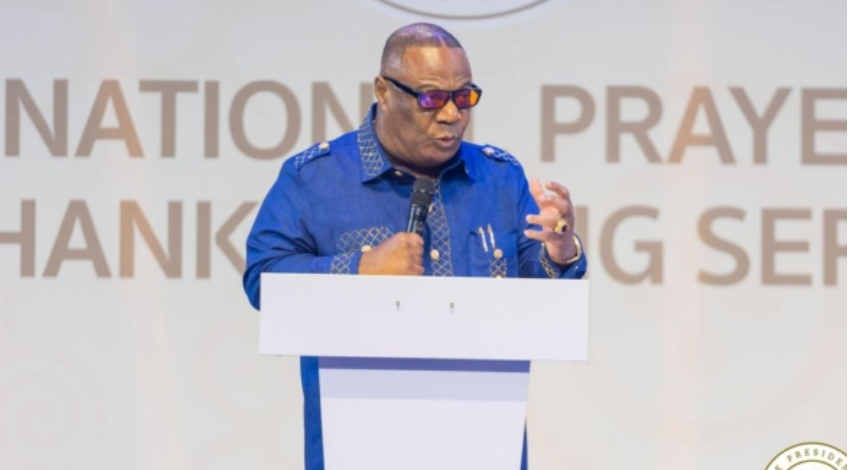
Founder and General Overseer of Action Chapel International, Nicholas Duncan-Williams, has addressed the ongoing debate surrounding prophetic declarations linked to political elections, urging a more grounded biblical understanding when such matters arise.
His remarks come in the wake of a public apology by Accra-based preacher Bernard Elbernard Nelson-Eshun, whose widely circulated prophecy that Kennedy Ohene Agyapong would win a recent internal party primary failed to materialise. The outcome reignited national conversations about the place of prophetic pronouncements in Ghana’s competitive democratic politics.
Speaking on Channel One TV, Archbishop Duncan-Williams reflected on the intense public reactions that trailed the primaries, before, during and after several prophetic messages were shared about the anticipated winner.
Responding to questions on how spiritual leaders should manage public scrutiny when prophetic messages intersect with politics, he emphasised the need to distinguish between Old Testament and New Testament prophecy.
According to the Archbishop, in Old Testament times, individuals depended on prophets for divine direction because the Spirit of God came upon selected people temporarily rather than dwelling within them permanently. However, under the New Testament dispensation, believers are guided by the indwelling presence of the Holy Spirit.
Referencing Revelation 19:10, he noted that “the spirit of prophecy is the testimony of Jesus,” stressing that genuine prophecy must ultimately affirm the Lordship of Christ. He further cited Hebrews 1:1–2 to illustrate that while God spoke through prophets in ancient times, He now speaks through His Son, Jesus Christ, who promised the Holy Spirit as the Spirit of truth.
Archbishop Duncan-Williams argued that many of the controversies surrounding election-related prophecies arise not from a lack of formal education but from limited scriptural grounding.
He explained that prophets in ancient Israel addressed kings who were installed by God within a theocratic system a framework fundamentally different from today’s secular democratic states.
“Our countries and nations are secular. They are not the state of Israel,” he stated, urging discernment and caution in applying biblical prophetic models to modern political contests.
While affirming that God still speaks today, the Archbishop maintained that prophetic ministry, particularly in politically sensitive environments, must be exercised with theological depth, wisdom and a strong sense of responsibility.