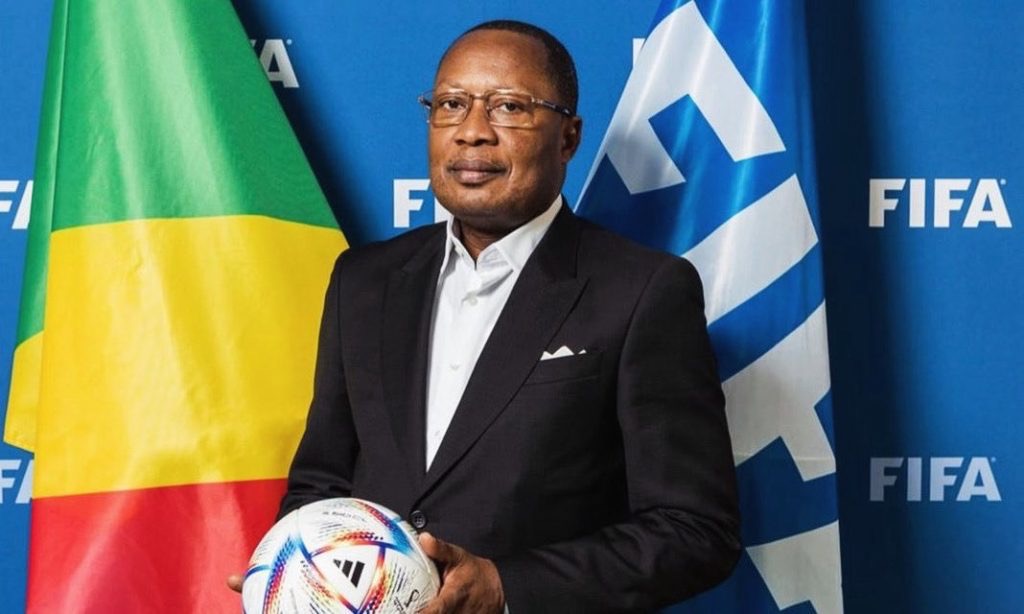
The president of the Congolese Football Federation (FECOFOOT), Jean-Guy Blaise Mayolas, has been sentenced to life imprisonment following a landmark corruption trial in Brazzaville.
A court delivered the verdict on Tuesday, 10 March, marking the climax of an eight-month investigation into the “deeply entrenched” misappropriation of international development funds.
Mayolas was convicted in absentia of money laundering, embezzlement, and document forgery.
In a sweeping ruling that has sent shockwaves through African football administration, the court also handed life sentences to his wife and son for their roles in the fraudulent scheme.
The case centred on the disappearance of nearly $1.3 million provided by FIFA, football’s global governing body.
These funds were specifically earmarked for grassroots initiatives and administrative upgrades in the Republic of Congo.
Instead, prosecutors proved the money was syphoned off through a sophisticated network of falsified records and fraudulent transactions.
Investigators described a systemic culture of greed where funds intended for the next generation of Congolese footballers were diverted for private use.
While the Mayolas family received the harshest penalties, the rot extended to the federation’s inner circle.
The FECOFOOT General Secretary, Badji Mombo Wantete, and the Treasurer, Raoul Kanda, were each sentenced to five years in prison after being found guilty of participating in the financial misconduct.
During the trial, the court examined a vast paper trail of banking transactions and internal audits.
The evidence painted a picture of a governing body that operated more like a private enterprise than a public sporting authority.
This ruling is the most significant legal action ever taken against sporting officials in the country’s history.
For years, fans and activists in Brazzaville and beyond have called for greater transparency regarding how FIFA development grants are spent.
The scandal now leaves FECOFOOT in a state of paralysis. With its leadership either in hiding or behind bars, international observers expect the global governing body to intervene and oversee potential reforms.
The Republic of Congo now faces a long road to restoring its sporting credibility. Critics argue that while the life sentences serve as a powerful deterrent, the focus must now shift to structural reform to ensure accountability.
Footballing authorities across Central Africa will be watching closely to see if this verdict triggers a wider “clean-up” of the sport across the region.
For now, the beautiful game in Congo remains overshadowed by a very ugly financial reality.