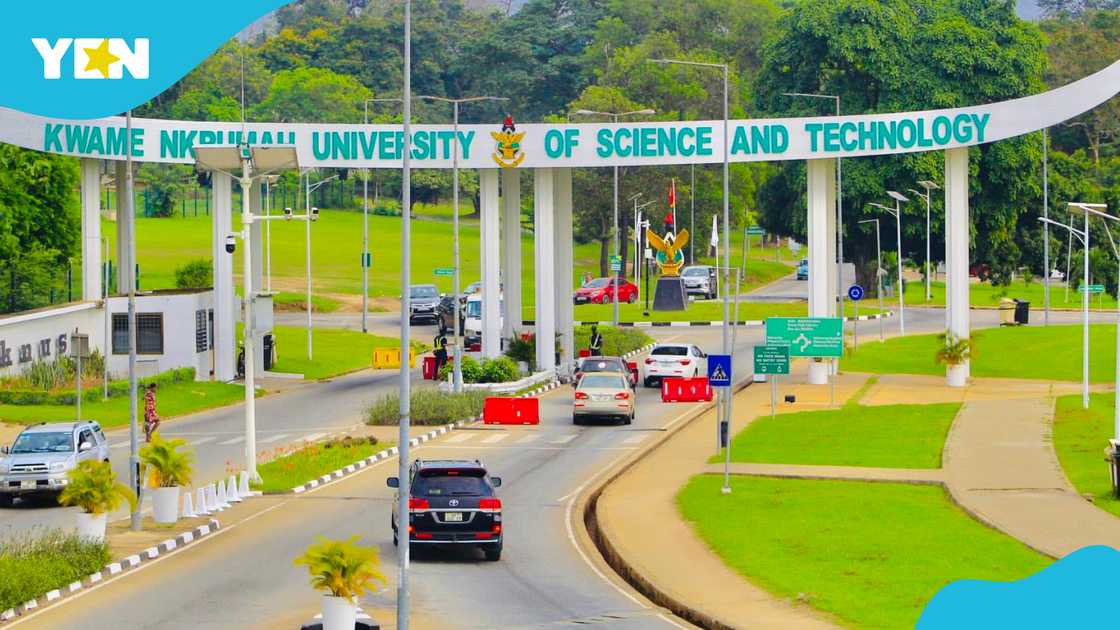
The Court of Appeal sitting in Kumasi has nullified a directive issued by the Vice-Chancellor of the Kwame Nkrumah University of Science and Technology (KNUST) requiring a senior lecturer to apologise to two colleagues, ruling that the action violated principles of natural justice.
In a unanimous decision delivered on February 12, 2026, a three-member panel made up of Justices K. Baiden, Richard Mac Kogyapwah and John Bosco Nabarese allowed an appeal brought by Prof. Rexford Assasie Oppong against the university’s Registrar.
The ruling overturned an earlier High Court judgment that had dismissed his application for judicial review.
The matter traces back to March 2023 when the Vice-Chancellor of KNUST, Rita Akosua Dickson, established a fact-finding committee chaired by Prof. Samuel I.K. Ampadu. The committee was tasked with investigating a petition filed by senior members of the Department of Architecture.
The petition accused Prof. Oppong, then Head of Department, of intimidating staff, making unilateral decisions without consulting the departmental board, breaching graduate studies regulations, and interfering with mid-semester examinations.
In response, Prof. Oppong levelled counter-allegations against two colleagues Prof Daniel Yaw Addai Duah and Dr. Alexander Boakye Marful accusing them of insubordination and collecting money from students to organise extra classes.
The committee investigated both the original petition and the counterclaims before submitting its recommendations to the Vice-Chancellor.
Although Prof. Oppong appeared before the committee and presented oral and documentary evidence, he later argued that he was denied the opportunity to cross-examine those who had accused him.
In August 2024, the Registrar communicated the Vice-Chancellor’s directives based on the committee’s findings.
The committee had concluded that Prof. Oppong’s allegations against the two lecturers were unsubstantiated and had harmed their reputations.
Following this conclusion, the Vice-Chancellor directed Prof. Oppong to render an apology to the two colleagues.
Challenging the directive, Prof Oppong contended that despite the committee being described as a fact-finding body, the order to apologise amounted to a disciplinary sanction.
He argued that the committee was not established under the university’s statutes as a disciplinary authority and that the action bypassed laid-down procedures, including his right of appeal.
Delivering the lead judgment, Justice Baiden held that while the Vice-Chancellor had the administrative mandate to constitute a fact-finding committee and receive its recommendations, enforcing those recommendations in a manner that carried disciplinary consequences required strict adherence to due process.
The court ruled that compelling a professor to apologise was not a minor administrative measure but an action implying culpability. As such, it required procedural safeguards comparable to formal disciplinary proceedings, including proper notice and a fair hearing.
The panel described the failure to observe due process as a “fatal omission,” warranting judicial intervention.
Consequently, the court ordered that the Registrar’s letter dated August 13, 2024 which conveyed the apology directive be brought before the court and quashed. The earlier High Court ruling delivered on January 15, 2024, was also set aside. No costs were awarded.
The judgment draws a clear distinction between investigative committees and disciplinary bodies within public institutions, particularly universities.
The appellate court emphasised that while university administrators may rely on fact-finding committees to establish facts, any action that effectively imposes a disciplinary penalty must strictly comply with statutory procedures and the rules of fair hearing.
The judges further advised Prof. Oppong to consider using internal grievance mechanisms in resolving future disputes and criticised the university for failing to provide the court with complete copies of its governing statutes.