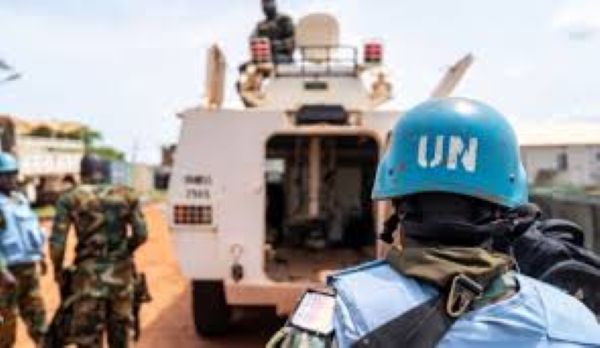
Four Ghanaian soldiers wounded in a missile strike on their United Nations peacekeeping base in southern Lebanon are responding to treatment and are expected to continue receiving medical care in the country, the Ghana Armed Forces has confirmed.
According to the Director General of Public Relations for the Ghana Armed Forces, Veronica Adzo Arhin, the injured personnel will most likely remain in Lebanon for treatment unless their condition worsens significantly.
“I believe they will be managed in Lebanon unless the situation gets out of hand, in which case they will be repatriated home,” she said.
“But from current assessments, they are responding well, so there is hope they will continue to receive treatment there.”
The incident occurred on Friday, March 6, when the Ghanaian Battalion Headquarters at the Al Qouzah outpost, operating under the United Nations Interim Force in Lebanon (UNIFIL), came under two missile strikes between 17:45 and 17:52 local time.
The attack happened during an exchange of fire between the Israel Defense Forces and the Lebanese militant group Hezbollah.
Two of the Ghanaian soldiers sustained critical injuries, while another suffered psychological trauma.
The strike destroyed the Officers’ Mess at the base, which was completely burnt down. However, replacement accommodation has since been arranged and logistical support provided to the affected personnel.
The most critically injured soldier has already undergone surgery.
Deputy Defence Minister Ernest Brogya Genfi confirmed that the operation was successfully carried out on the morning of Saturday, March 7.
The injured soldiers were first treated at a Level One Medical Bunker at the base before being evacuated to the UNIFIL Headquarters Referral Hospital for further care.
Meanwhile, Ghana’s Minister for Foreign Affairs, Samuel Okudzeto Ablakwa, has formally written to the UN Secretary-General, António Guterres, demanding a full investigation into the strike.
In the letter dated March 7, Ghana described the attack as a violation of international humanitarian law protecting peacekeeping personnel and called for a “full, immediate, impartial and transparent investigation” into the circumstances surrounding the incident.
The Israeli Ambassador to Ghana described the strike as catastrophic and expressed sympathy to the Ghanaian contingent, while the Lebanese government condemned the attack as a grave breach of international law and called for accountability.
Ghana remains one of the largest troop-contributing countries to United Nations peacekeeping missions, with its forces serving in operations across Africa and the Middle East.
The Ghanaian contingent in Lebanon operates within a buffer zone along the Israel Lebanon border under a UN mandate to monitor ceasefire arrangements and prevent escalation of hostilities.