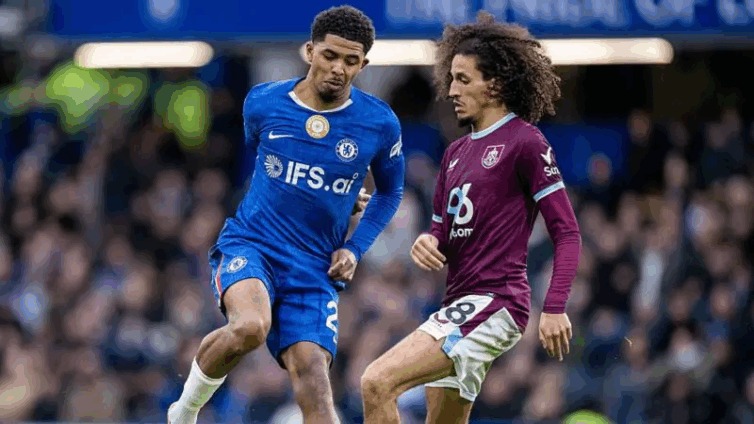
Chelsea defender Wesley Fofana and Burnley midfielder Hannibal Mejbri have condemned the “vile” racist abuse they received following Saturday’s 1-1 draw at Stamford Bridge.
The Premier League stars took to social media to share screenshots of the offensive messages sent to them, sparking fresh questions over the effectiveness of anti-racism campaigns in English football.
Chelsea said they were “appalled and disgusted” by the treatment of Fofana, while Burnley have reported the abuse directed at Mejbri to the police and Meta, the parent company of Instagram.
Fofana, who was sent off for a second bookable offence during the match in West London, expressed his frustration at the lack of progress in tackling online hate.
“2026, it’s still the same thing; nothing changes,” the French defender posted. “These people are never punished. You create big campaigns against racism, but nobody actually does anything.”
Earlier on Sunday, Tunisia international Mejbri shared his own experiences of the afternoon’s fallout.
He wrote that it is 2026 and there are still people like that, urging the public to educate themselves and their children.
Both clubs moved quickly to support their players and call for accountability from social media platforms.
Chelsea described the abuse as “abhorrent,” stating they stand unequivocally with Fofana and all players who are forced to endure such hatred simply for doing their job.
Burnley confirmed a zero-tolerance approach, noting that the club has reported the post to Meta and expects strong support from the Premier League and the police to ensure the individual responsible is investigated.
The Premier League reiterated that any individuals identified and found guilty of discrimination will face the strongest possible consequences, including club bans and legal prosecution.
The incidents at Stamford Bridge are the latest in a series of high-profile cases this season.
Just days ago, UEFA launched an investigation into the alleged racial abuse of Real Madrid winger Vinícius Júnior during a Champions League match against Benfica.
In January, Newcastle United contacted the police after midfielder Joe Willock was the subject of “disgusting” abuse and threats, while Tottenham forward Mathys Tel was targeted after a Super Cup penalty shootout in August.
The hostility extends to the stands as well. Last August, a match between Liverpool and Bournemouth was halted after forward Antoine Semenyo reported abuse from the Anfield crowd; a trial for the accused is scheduled for April.
A BBC investigation last November highlighted the scale of the crisis, identifying more than 2,000 extremely abusive posts directed at Premier League and WSL players and managers in a single weekend.
Anti-discrimination group Kick It Out said it “stood alongside” the players but insisted social media companies must do more to protect them.
While the group acknowledged that football is working with the UK Football Policing Unit and Ofcom, they argued that platforms must improve accountability when incidents occur.
A spokesperson for Meta told BBC Sport that the company removes racist content when they find it.
They added that while no single action will stop such behaviour overnight, they will continue working to protect the community and cooperate with police investigations.
However, for players like Fofana and Mejbri, the recurring nature of the abuse suggests that the digital environment remains a hostile territory for Black players in 2026.
Source: Ekow Segu